New resource empowers local organizations to develop Food is Medicine programs
 Washington, DC – January 22, 2026 – Food & Society at the Aspen Institute has launched its Food is Medicine Community Action Plan to support community-based organizations (CBOs) in scaling food-based health interventions. Developed in partnership with organizations across the United States who joined Food & Society at convenings hosted in Tulsa, Tucson, and Boston, and partners who shared case studies with critical on-the-ground experience, the Action Plan recognizes the central role local organizations play in addressing both health outcomes and food security through innovative nutrition programs.
“Community-based organizations have been at the forefront of Food is Medicine work for decades,” said Corby Kummer, executive director of Food & Society. “Faith-based groups, food banks, medically tailored meal providers, and community-engaged health care providers—all of them understand the unique needs of the communities they serve. We want to make the lessons they’ve learned available to everyone curious about how to put Food is Medicine into practice.”
The Community Action Plan provides practical guidance and real-world insights for CBOs looking to implement Food is Medicine programs, which have shown improved health outcomes while addressing food and nutrition insecurity. These interventions connect people with necessary nutrition through various models, including medically tailored meals and groceries, produce prescriptions, and community food distribution programs.
The Community Action Plan is part of Food & Society’s Food is Medicine initiative that started with the publication of its Research Action Plan in 2022, and revised in 2024 thanks to ongoing support from the Walmart Foundation. Additional support from the Ardmore Institute of Health allowed Food & Society to convene practitioners and community leaders from across the country. These convenings brought together diverse perspectives and on-the-ground expertise to shape a resource that reflects the real-world experiences and needs of organizations doing this work.
The Community Action Plan features:
Rationale for Centering the Community: An overview on why and how to keep communities central throughout the design, implementation, and evaluation of Food is Medicine interventions.
Community Case Studies: Innovative experts share strategies and learnings and on-the-ground experience implementing successful Food is Medicine programs.
Workshop Insights: Summary findings from Food & Society’s series of convenings that highlight effective strategies and emerging trends.
“Many CBOs have successfully operated Food is Medicine programs despite facing inconsistent resources,” said Alexandra Lewin-Zwerdling, Food & Society’s strategic lead. “They have leaned heavily on diversifying funding to ensure their patients can continue to be served in ways that benefit both individuals and their families, The Action Plan addresses these sustainability challenges while highlighting the importance of local leaders, staff, and volunteers who bring deep community knowledge to their work.”
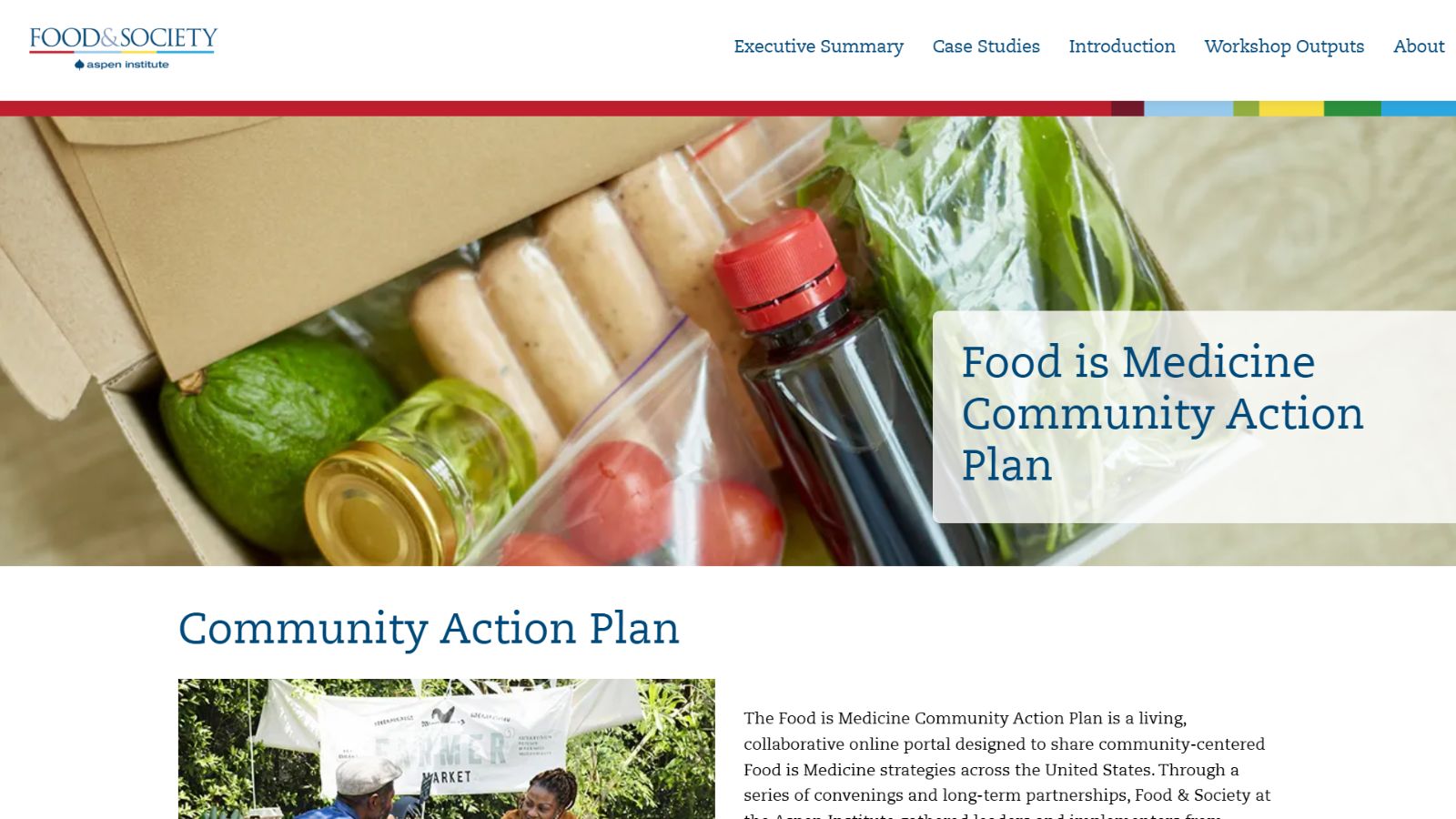
This resource is designed for organizations at any stage of their Food is Medicine journey, from those exploring food-based health interventions to those looking to expand existing programs. By sharing proven strategies and community-centered approaches, the Action Plan aims to speed up the growth of Food is Medicine programs nationwide. The Action Plan is available at www.FIMCommunity.org.
